
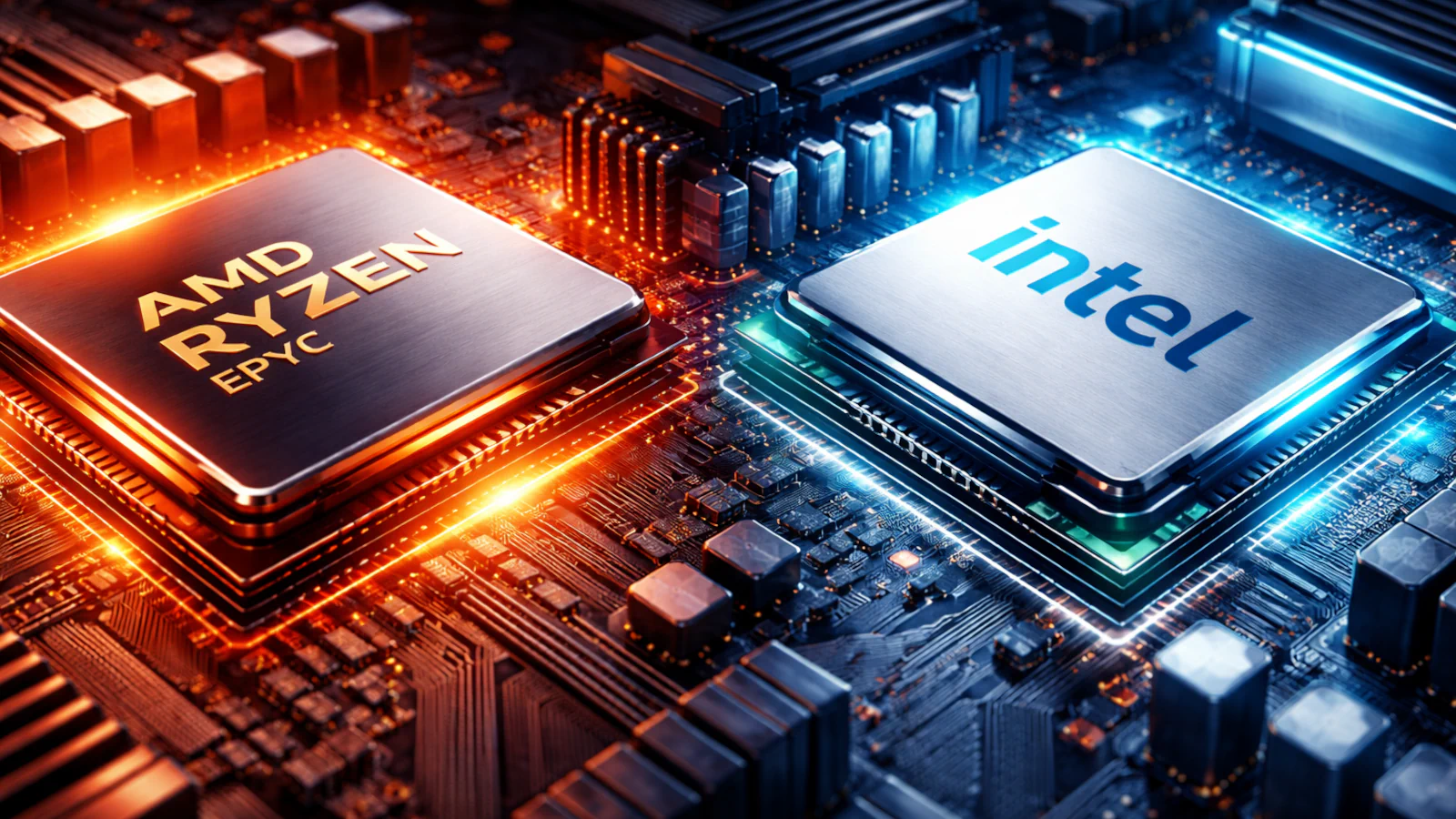
Summary: This article analyzes how AMD, on the brink of collapse in 2015, defeated Intel’s monopoly through the strategic “Zen” bet, chiplet architecture, and partnership with TSMC, reshaping the global chip industry.
For decades, the CPU market looked predictable. Intel dominated performance, market share, manufacturing, and profit margins. AMD survived mostly as the “cheaper alternative,” rarely dictating the pace of innovation.
By the mid-2010s, many analysts considered AMD a company on life support. And yet, less than a decade later, AMD not only returned from the brink — it fundamentally reshaped the semiconductor industry.
This is the story of how that happened.
The Situation in 2015: Intel at the Top, AMD Near Collapse
In 2015, Intel appeared untouchable.
- Intel’s market capitalization exceeded $160 billion
- AMD was valued at barely $2–3 billion
- Intel controlled manufacturing, architecture, and roadmap execution
- AMD was bleeding money, losing relevance, and falling behind technologically
At the time, AMD’s Bulldozer architecture had failed to deliver on its promises. Performance per watt was poor, single-core performance lagged badly, and Intel’s tick-tock manufacturing cadence kept it years ahead.
From the outside, AMD looked like a company waiting for an exit. Internally, however, a high-risk decision was being made.
The Critical Bet: Zen or Nothing
AMD’s turning point came down to one word: Zen. Instead of iterating on failing designs, AMD made a radical choice:
- Scrap its existing CPU architecture entirely
- Invest heavily in a clean-sheet design
- Bet the company on one final attempt
This was not a safe move. Zen required:
- Massive R&D spending
- Years without competitive products
- Trust that the market would still care when AMD returned
If Zen failed, AMD would likely not survive.
Lisa Su and Strategic Discipline
A key factor in AMD’s revival was leadership. When Lisa Su became CEO in 2014, AMD shifted strategy dramatically:
- Fewer products, executed better
- Focus on performance per watt, not marketing tricks
- Long-term partnerships instead of short-term wins
- Clear architectural roadmap instead of reactive design
Rather than trying to beat Intel everywhere at once, AMD chose to out-execute. Zen was designed with scalability in mind — desktop, server, mobile, and future iterations from a single core philosophy.
Zen Arrives: Ryzen Changes the Narrative
When AMD launched Ryzen in 2017, the industry reaction was immediate. For the first time in years, AMD offered:
- Competitive single-core performance
- Excellent multi-core scaling
- Aggressive pricing
- Modern platform features
Intel was no longer competing against “budget CPUs.” It was competing against a credible architectural rival. Ryzen forced Intel to respond — and for the first time in a decade, Intel was reacting instead of leading.
The Real Shockwave: EPYC and the Data Center
While Ryzen attracted consumer attention, the real strategic victory happened elsewhere. AMD’s EPYC processors entered the server market — Intel’s most profitable territory.
EPYC offered:
- More cores per socket
- Better performance per dollar
- Strong memory and I/O advantages
- Competitive energy efficiency
Cloud providers noticed. Hyperscalers like AWS, Microsoft Azure, and Google Cloud began adopting AMD CPUs at scale. Enterprise customers followed. This was not just market share loss for Intel — it was margin erosion.
Intel’s Problems Compound
AMD’s rise coincided with Intel’s internal struggles:
- Delays in advanced manufacturing nodes
- Stagnation in core counts
- Power efficiency challenges
- Organizational inertia
Intel remained massive, but it was no longer agile. Meanwhile, AMD:
- Used external foundries efficiently (notably TSMC)
- Iterated rapidly (Zen → Zen 2 → Zen 3 → Zen 4)
- Improved IPC, efficiency, and platform stability generation after generation
The gap closed — and then reversed in key segments.
Market Reality by the Early 2020s
By the early 2020s, the shift was undeniable:
- AMD CPUs competed at the top end, not just mid-range
- EPYC gained serious data-center traction
- Ryzen reshaped consumer expectations for core counts
- Intel lost its “automatic default” status
At one point, AMD’s market valuation briefly surpassed Intel’s — an unthinkable scenario just years earlier.
What AMD Really Won — And What It Didn’t
AMD did not “destroy” Intel. Intel remains a giant with enormous resources, manufacturing ambitions, and ecosystem influence. What AMD did achieve was arguably more important:
- It broke Intel’s monopoly-like momentum
- It restored real competition to the CPU market
- It forced innovation through pressure, not promises
- It proved that architectural discipline can beat brute force
Consumers benefited. Enterprises benefited. The industry benefited.
Why This Story Matters Beyond CPUs
AMD’s comeback is not just a tech story — it’s a strategic lesson. It shows that:
- Legacy dominance is fragile
- Execution beats marketing
- Long-term bets can pay off if leadership stays disciplined
- Competition drives innovation more than regulation ever could
In an era where the semiconductor industry is once again at the center of global politics, supply chains, and AI infrastructure, AMD’s story remains deeply relevant.
Conclusion: The Bet That Paid Off
AMD survived by doing what most struggling companies cannot: admitting failure, starting over, and committing fully to a long-term vision.
Zen was not just a CPU architecture. It was a declaration that AMD would no longer play by Intel’s rules. That bet didn’t just save the company. It reshaped the entire chip industry.