
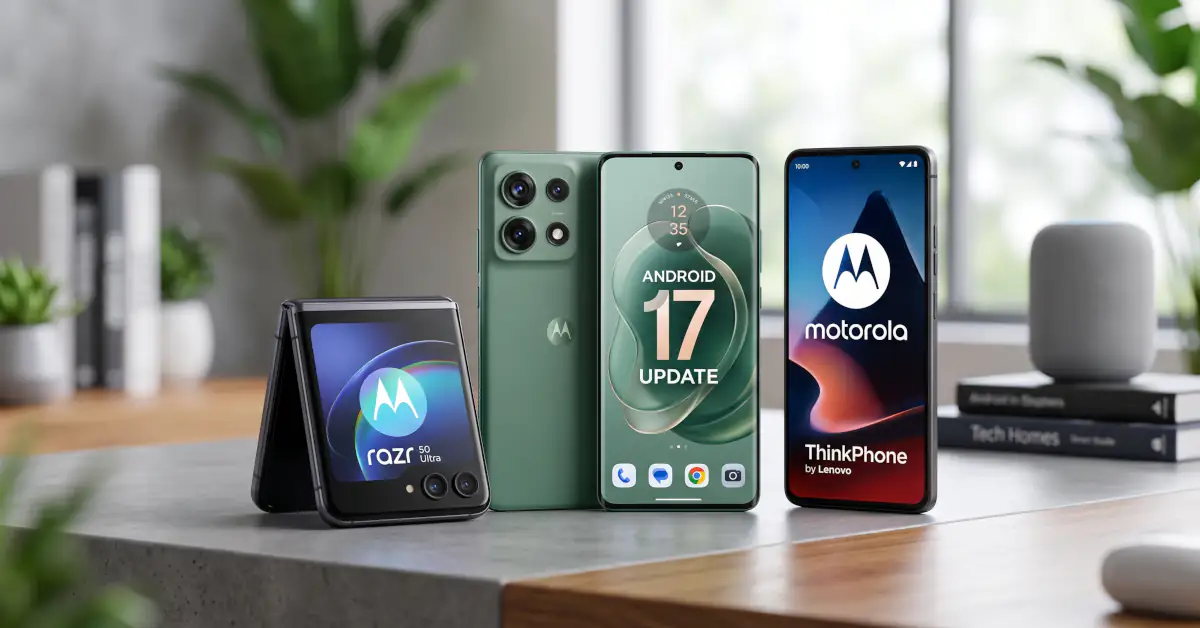
Quick Answer: Motorola devices slated to receive Android 17 are primarily limited to recent premium flagships, including the Edge 50 lineup, newer Razr foldables, and business-focused models like the ThinkPhone. These handsets qualify because Motorola commits between three to five major OS upgrades to its higher tiers. In contrast, mainstream Moto G and entry-level devices will miss the cutoff, as they are typically restricted to just one or two platform updates.
Motorola Devices Eligible for Android 17
Keeping track of Android software roadmaps can be frustrating, especially when competing brands take drastically different approaches to device longevity. While companies like Google and Samsung now offer extended multi-year support across broad price segments, Motorola takes a much more tiered approach.
Historically, Motorola has faced criticism for slow rollouts and brief update cycles. However, recent release cycles have shown a deliberate shift—at least at the top of the lineup. Motorola has steadily lengthened software commitments for select flagship and business-class devices, meaning a predictable group of current models is well-positioned to receive Android 17.
Understanding where your specific phone lands in this cycle is vital whether you use it for daily office work, travel, or family communication.
How Motorola Handles Software Support
Rather than establishing a uniform update policy across its entire portfolio, Motorola segments support based strictly on device tiers:
- Flagship and Premium Foldables (Razr series, select Edge models): High-end devices receive between three and five major Android version upgrades, backed by periodic security maintenance.
- Upper Mid-Range (Standard Edge variants and select region-specific handsets): These usually qualify for two major Android updates.
- Budget Moto G and Entry-Level Moto E: Designed for value and immediate affordability, these phones typically launch with a promise of only one major OS upgrade alongside two to three years of basic security patches.
Because Android 17 requires multiple generational jumps from models that debuted on Android 14, only devices with a baseline pledge of three or more OS updates make the cut.
Motorola Phones Slated for Android 17
Based on official launch pledges and extended enterprise policies, the following handsets are scheduled to receive the Android 17 update:
Motorola Razr Lineup
- Motorola Razr 50 Ultra / Razr+ (2024)
- Motorola Razr 50 / Razr (2024)
Motorola Edge Lineup
- Motorola Edge 50 Ultra
- Motorola Edge 50 Pro
- Motorola Edge 50 Fusion
- Motorola Edge 50 Neo
Motorola Enterprise & Specialty Devices
- Motorola ThinkPhone (recent generations guaranteed extended business-tier support)
Why Most Moto G Models Miss Out
The Moto G series remains a global staple for students, secondary phone users, and budget-conscious buyers who want clean software without flagship price tags. Yet that accessible pricing comes with a clear trade-off: a short software lifespan.
Most recent Moto G models shipped with Android 14 or Android 15. Because Motorola rarely promises more than a single version bump for this tier, their official upgrade journey effectively stops at Android 15 or Android 16.
Standard Moto G phones will not transition to Android 17. They will, however, continue to receive essential security maintenance patches until their standard support window closes.
What Missing an OS Update Really Means for Everyday Use
A phone that stops receiving major platform upgrades does not abruptly become obsolete. While an upgrade brings refined system performance, tweaked menus, and fresh background efficiency tools, sticking with an older version is rarely a day-to-day blocker.
- App Compatibility: Android handles system features differently than iOS. Essential tools like banking apps, transit services, and streaming platforms rely heavily on Google Play Services, which continue to run smoothly on older Android versions for several years after OS upgrades halt.
- Security Patches: Security maintenance runs on a separate track from headline OS updates. A device can stay protected against emerging vulnerabilities even if its visual interface stops evolving.
- Hardware Longevity: Sometimes, remaining on a stable version has practical perks. Newer operating systems are often resource-heavy, and skipping them can prevent older processors and batteries from feeling sluggish.
Common Misconceptions About Motorola Updates
“Every newly released Motorola phone gets the same support.” This is simply not the case. A premium Razr or Edge handset receives far more generational upgrades than an entry-level Moto G purchased in the very same store on the same day.
“No Android 17 means the phone stops functioning.” Reaching end-of-support for major OS updates merely freezes the base platform. Everyday browsing, messaging, and app installs continue uninterrupted.
“Carrier models receive software at the same time as unlocked models.” Telecommunications providers run independent validation, cellular compliance, and bloatware checks on network builds, which often delays carrier-locked rollouts well past unlocked editions.
Practical Advice for Motorola Owners
If long-term software support is a priority for your next phone, pay closer attention to the spec sheet than the badge on the back:
- Target the right tier: If keeping up with future releases like Android 17 matters, choose an Edge Pro/Ultra model or a recent Razr foldable rather than an entry-level Moto G.
- Check your phone’s status: Head to Settings > System (or About Phone) > Android Version to see where your device currently stands.
- Prioritize security over new features: If your phone is excluded from Android 17, check how many remaining security patch cycles it has left. As long as security updates continue to arrive, there is little urgency to upgrade your hardware.
Frequently Asked Questions
Will the Moto G series receive the Android 17 update?
No, standard Moto G models will not receive Android 17. Most handsets in this series receive only one major platform upgrade, which stops their software journey on earlier Android versions.
Is the Motorola Razr 50 Ultra guaranteed to get Android 17?
Yes, the Motorola Razr 50 Ultra is slated to receive Android 17 under Motorola’s multi-year OS support commitment for its flagship foldable lineup.
Does a phone stop working when major OS updates end?
No, a phone does not stop working when platform upgrades conclude. Core applications, Google Play Services, and communication tools continue operating normally, often backed by ongoing security patches.
How do I check for upcoming software updates on a Motorola phone?
Open Settings, tap System (or System updates), and select Check for updates. Your phone will query Motorola’s servers and notify you if a new firmware build is ready for download.
Why do carrier-locked Motorola phones get updates later?
It depends on the mobile carrier’s testing protocols. Mobile network operators must independently test and validate each firmware build for network stability, emergency features, and carrier-specific tools before approving a public release.
Editorial Fact-Check Notes
- Edge 50 Series Update Promises: Motorola introduced varying policies across the Edge 50 family. For instance, the Edge 50 Neo launched with an ambitious 5-year OS commitment (guaranteeing updates well past Android 17), whereas earlier models like the Edge 50 Pro/Ultra originally debuted with three OS updates (taking them to Android 17). The phrasing has been tuned to avoid implying every Edge 50 model has the exact same policy.
- Moto G 2-Year Upgrades: While a couple of specific regional upper-tier Moto G devices occasionally receive two updates, mainstream G-series units remain capped at one. The text reflects this realistic distinction.
Source: TechFokus.rs